The process of launching a beverage brand requires significantly more than just developing a great flavour and excellent packaging. Prior to distributing the product to consumers, the manufacturers should have confidence that each new batch is safe and of good quality. Here comes the necessity for beverage batch testing. It allows detecting any problems related to microbial quality, formulation, uniformity, stability and many other product parameters before commercial release. Proper testing is crucial for both start ups and well established beverage brands. This is how you can avoid any risks plus provide greater confidence when you’re moving from product development to large scale production.
What Is Beverage Batch Testing?
Beverage batch testing is the procedure used in analyzing the samples drawn from a particular batch to see whether the final beverage is in line with the predetermined safety and quality standards.
The batch is manufactured under certain conditions using certain ingredients, processing parameters and packaging. Analysis of the samples drawn from such batches gives an idea as to whether the final product meets the established requirements.
Nevertheless, the testing procedure should not be seen as a replacement for good manufacturing practices, sanitation procedures, preventive control measures or process monitoring. The food safety system is mainly aimed at prevention of possible risks, but the product testing procedure can be used as verification in case of need. The FDA states that product testing can help verify the implementation of preventive control measures.
Why Is Beverage Batch Testing Important Before Launch?
Beverage batch testing becomes especially important prior to product launch because commercial scale production may involve variables that might be absent during formulation at a smaller scale.
The performance of a beverage during development sample testing might not be the same when production volumes increase. Ingredients, mixing, processing, bottling, storage and packaging can affect the final result. Testing gives manufacturers objective information in addition to sensory evaluation and production checks.
For a new brand, identifying problems before launch is significantly more advantageous than doing so post-launch after the products have hit the shelves or consumers. Pre-launch testing of a brand can thus lead to better decisions, ensure greater quality assurance and avoid costly holds and recalls.
For a new brand, identifying problems before launch is significantly more advantageous than doing so post launch after the products have hit the shelves or consumers. Pre-launch testing of a brand can thus lead to better decisions, ensure greater quality assurance and avoid costly holds and recalls.
It Supports Beverage Safety
Safety is the priority in any food and not its marketing value or aesthetic appeal. Whether microbial testing or any other type of analysis is conducted depends on the beverage formulation and hazard analysis. It can include microbiological analysis or other relevant assessments.
Testing requirements depend on the product, the process used, the ingredients, the target market and any risks that are identified. FDA guidance states that food facilities should assess potential hazards and use appropriate preventive measures.
Therefore, there is no one-size-fits-all list for lab testing that can be applied to all drinks. An appropriate scientific test program needs to be created based on the actual risks.
It Helps Maintain Consistent Quality
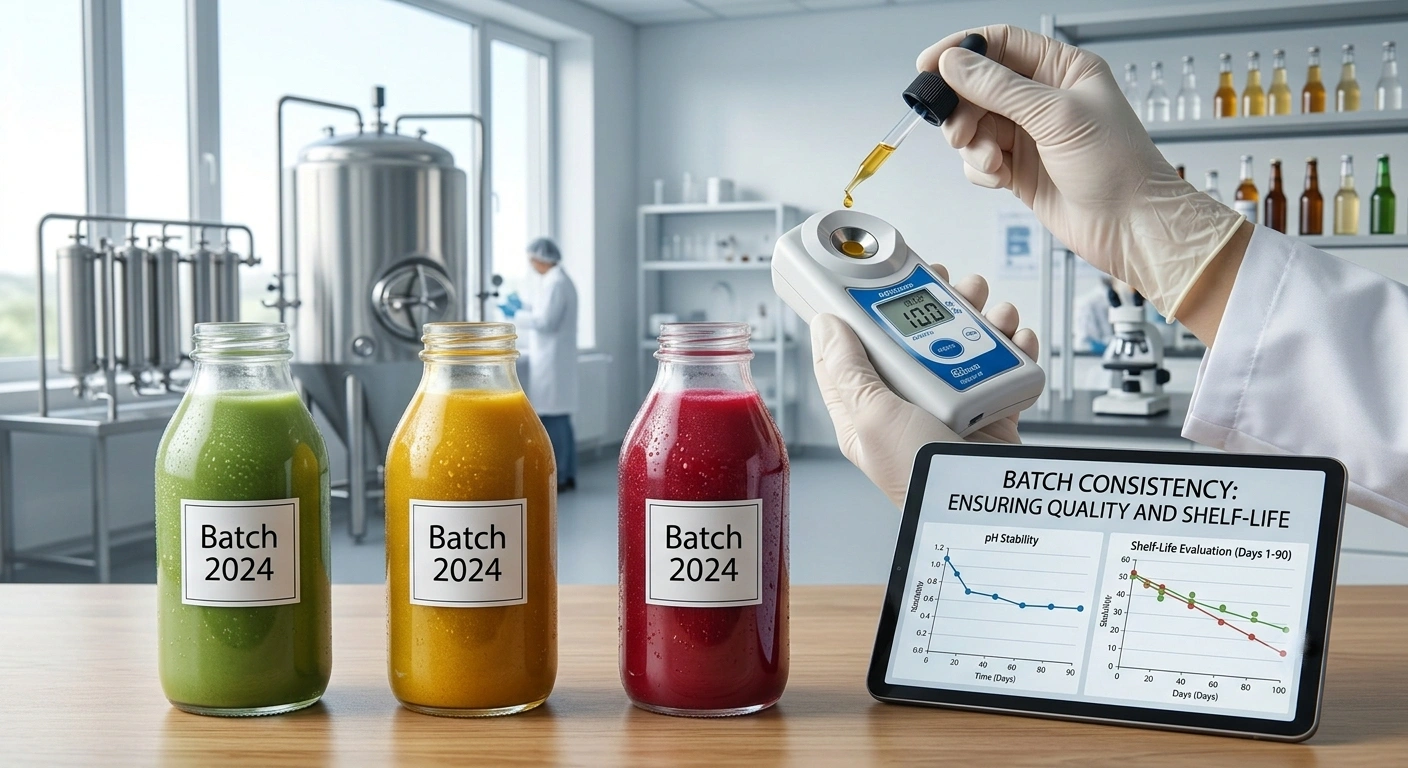
Consumers have expectations that their beverages should maintain a certain taste, appearance and performance each time they buy them. Beverage quality testing can be useful to evaluate attributes like pH level, acidity, appearance, taste, smell, colour and other formulation specific specifications.
Consistency becomes extremely important when you are transitioning from pilot batches to the actual commercial manufacturing. A repeatable process, clear product specifications, suitable raw materials and documented quality controls all contribute to a consistent finished beverage.
It Supports Shelf-Life Evaluation
Beverages undergo change even after they are manufactured. Changes in taste, colour, carbonation, separation, sedimentation, oxidation, microbial stability and package performance can result from storage conditions.
Consequently, beverage shelf life testing becomes an integral aspect to take into account during product development. Shelf-life studies can help establish how a beverage behaves over its intended storage period under defined conditions.
It is important to note that any claims relating to shelf-life need to be supported by appropriate evidence, rather than assumptions. This depends on the beverage, formulation, packaging, storage conditions and intended claim.
It Can Highlight Production Issues
Testing can give important hints if there is something wrong with the batch. An unusual pH level, an unexpected microbial test result, a difference in appearance or other irregularity can cause an investigation of ingredients, sanitation, processing, equipment and handling.
An effective beverage quality control system correlates the findings from tests with the production process and corrective actions if needed. This is a similar approach that the FDA adopts for its food-safety frameworks
What Tests Are Included in Beverage Batch Testing?
There is no test panel that works universally for all beverages. The appropriate method of testing beverages depends on the formula, risk assessment, mode of production, packaging and regulatory considerations of the target market.
Based on these, tests can be conducted in areas like microbiological profiling, pH, acidity, physical and chemical properties, sensory evaluation, nutrient content and packaging tests.
Sampling also needs equal consideration. The samples need to be properly designated and linked with the appropriate production lot. The test methodology must adopt a scientifically sound method and define the following factors: analytes, sampling method, analytical procedure, laboratory and corrective action where needed.
How Can Beverage Manufacturers Prepare for Testing?
Testing becomes more effective if the manufacturer sets up product specifications prior to the start of manufacturing. It shows what the acceptable ranges are for critical quality attributes and identifies which tests should be performed.
Brands should also discuss testing responsibilities with their manufacturer. It can be good to know what laboratory performs the analysis, which parameters are tested, the sample collection method, the documentation available and how nonconformity is handled.
For businesses seeking an end-to-end manufacturing partner, Ayuray Organics provides product formulation and prototyping, contract manufacturing, private label manufacturing, smart co-packing and in-house laboratory facilities. As per its website, the company operates under the certifications of ISO 9001:2015 and ISO 22000:2018.
The complete solution can be handy for brands needing product development, manufacturing, quality control and packaging all under one roof for a manufacturing relationship.
What Happens If a Batch Fails Testing?
A failed test cannot necessarily point out the reason for the failure of the batch, which needs to be analysed based on the applicable specification, test method, sampling plan and product risk.
Depending on the circumstances, the concerned batch may be put on hold and further investigation is done on the manufacturing history, raw material, manufacturing process, sanitation, equipment, sampling and laboratory test results. You can consider appropriate follow up testing.
Documented corrective action is critical as it is not just about dealing with one problematic batch but finding out why that happened so as to prevent it from happening again in the future.
Why Testing Matters for a New Beverage Brand
Startups may be tempted to pay attention only to marketing and branding and everything that goes along with the product development process. These factors are important but it always come down to the quality of the product which shapes the consumer’s experience.
A structured beverage batch testing program allows brands to have more visibility into how well their product meets expectations and standards before hitting the shelves. It may also result in valuable documentation for internal quality systems and discussions with manufacturing, retail or distribution partners.
Above all else, testing promotes a mindset of prevention rather than a reactive approach. As such, FDA’s HACCP guidelines also stress the need for controlling food-safety hazards instead of testing products after the fact.
Conclusion
Beverage batch testing is an important step carried out between beverage development and commercial launch. This process has several benefits, such as verifying safety and quality attributes, achieving consistency, uncovering problems with manufacturing and informing shelf-life decisions.
Testing works best within the context of a bigger food safety and quality management framework that includes appropriate controls, documentation, sanitization, monitoring and corrective measures. For those brands that are about to scale, partnering with an experienced manufacturer can be a logical step to take here.
If you are developing a new beverage and getting ready to manufacture it on a commercial level, it is important to discuss beverage batch testing beforehand rather than later.
Frequently Asked Questions
Q – What is beverage batch testing?
A – Beverage batch testing involves analysis of a sample of the production batch to see if the end product meets the set standards in terms of safety and quality.
Q – Why is beverage batch testing important before launch?
A – Batch testing can help us to identify any quality or safety concerns before distributing the products commercially. Manufacturers can get an opportunity to investigate and address the problems before before they even affect consumers.
Q – What tests are commonly performed on beverages?
A – This depends on the product itself. The tests can include microbiological, pH, acidity, physicochemical, sensory, compositional or packaging tests, depending on the formulation of the beverage.
Q – Does beverage batch testing prove a beverage is safe?
A – No. Batch testing of beverages is just one element of a bigger food safety system. Preventive controls, sanitation, process monitoring, hazard analysis and the right verification are important.
Q – When should beverage batch testing be performed?
A – It all depends on the product, process, risk factors, specifications, and quality system. Pre-launch testing needs to be arranged in advance during development in order to set the acceptance criteria.
Q – Can Ayuray Organics help with beverage testing and manufacturing?
A – According to Ayuray Organics, it offers product formulations and prototyping, contract manufacturing, private labelling, smart co-packing and in-house laboratories. Brands can discuss Ayuray Organics in regard to their specific product, testing requirements and manufacturing needs with the company before production.


