Consistency in taste, safety, freshness and adherence to standards is very crucial in the beverage industry for building customer trust. However, the question is what makes a beverage reliable throughout its formulation process to the final packaging? There are two closely connected systems that make this possible: Beverage Quality Assurance vs Quality Control. Despite the fact that these two terms are at times used interchangeably, they play entirely different roles. While the quality assurance system is all about prevention of defects by processes, the quality control system is all about detection and elimination of defects by inspections and tests.
Understanding the difference matters for beverage manufacturers to be able to work with consistency, reduce waste, meet regulatory requirements and protect their brand reputation.
Beverage Quality Assurance vs Quality Control: The Key Difference
In the most straightforward terms, quality assurance (QA) is process focused while QC is product focused. As stated by the International Organization for Standardization (ISO), quality assurance provides a framework for consistently achieving defined requirements while quality control verifies whether the requirements have been fulfilled by the actual products.
QA in beverage manufacturing is designed in a way to prevent defects before they take place. It encompasses procedures, employee training, supplier qualification, sanitisation, documentation, risk assessment and process management.
QC, however, involves testing and inspection of raw materials, production batches, packaging and finished beverages. It helps to identify deviations such that improper products can be fixed, rejected or researched before reaching consumers.
Both systems are necessary. QA establishes a reliable manufacturing process whereas QC verifies that the process is producing the expected results.
What Is Beverage Quality Assurance?
Beverage quality assurance is an organised approach to prevent quality and safety problems during beverage production. It starts before manufacturing and extends to packaging, storing and distribution.
An effective quality assurance plan may encompass supplier systems, raw material specifications, SOPs, sanitation programs, training programs, maintenance programs, traceability, documentation and internal audits.
For instance, a manufacturer producing herbal beverages can develop specifications for all ingredients used. Suppliers can be assessed, raw materials can be recorded and production processes can be standardised. These can prevent the chances of variations or contamination.
QA also supports continuous improvement. As noted by ISO, quality management entails measuring performance, assessing processes, identifying risks and basing improvement on evidence.
What Is Beverage Quality Control?
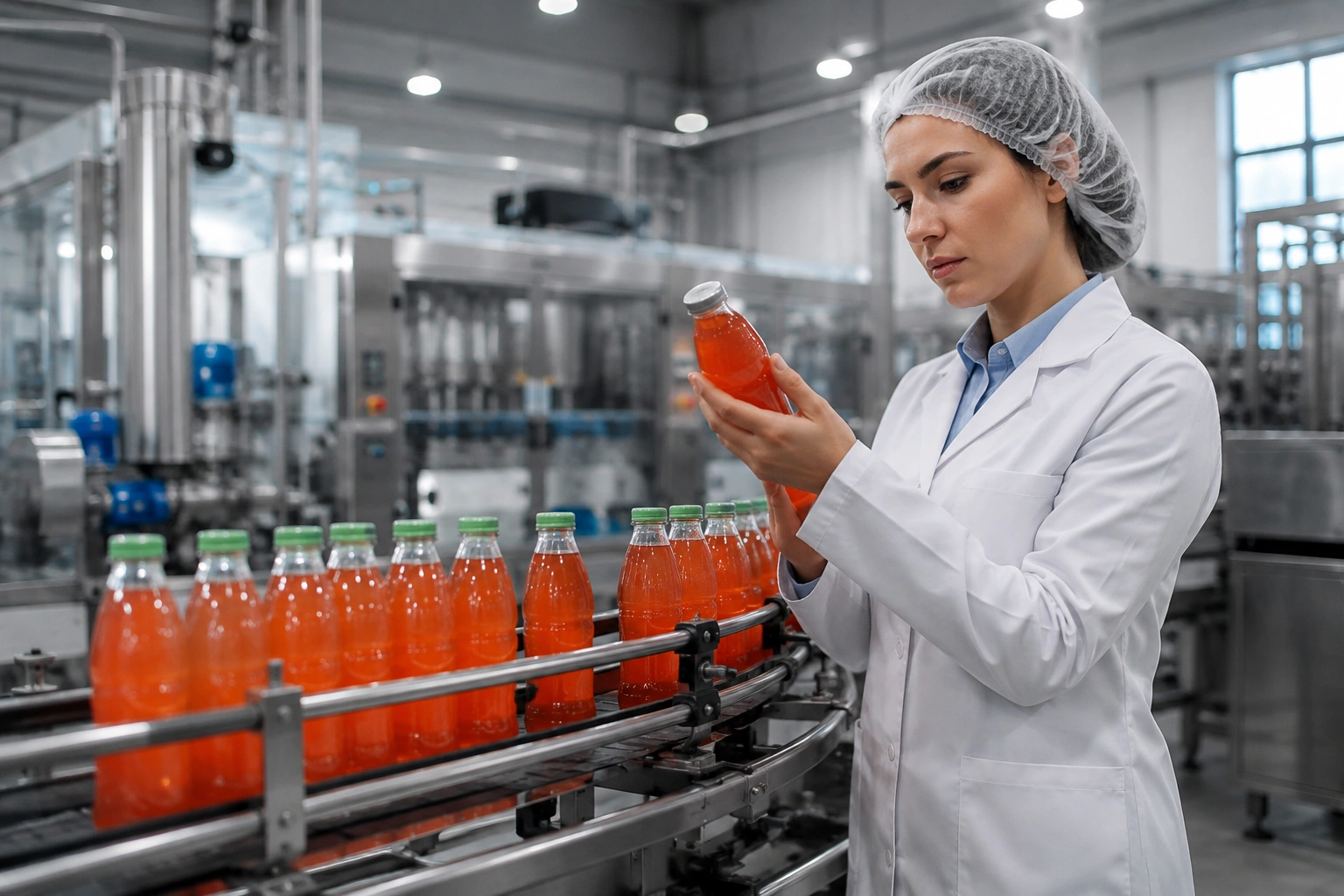
Beverage quality control is the actual process of inspection and testing that determines if the beverages under consideration meet specific requirements.
QC may start with incoming raw materials, where ingredients may be analysed for identity, appearance, purity, specification or any other specific criteria regarding safety. During production, QC may involve monitoring parameters such as temperature, mixing, fill volume, pH or other product specific characteristics.
Finished product testing may involve microbiological, chemical, physical, sensory or packaging checks, depending on the type of drink and its applicable requirements. Packaging inspections can identify leakage, damaged containers, incorrect labels or defective seals.
Batch level testing and checks related to microbiology, chemical, sensory and packaging are key elements of the quality control process according to Ayuray Organics.
Beverage Quality Assurance vs Beverage Quality Control in Beverage Manufacturing
Quality Aspect |
Quality Assurance |
Quality Control |
| Main Purpose | Prevent defects | Detect defects |
| Primary Focus | Processes and systems | Products and results |
| Approach | Preventive | Detective |
| Typical Activities | SOPs, training, audits and supplier approval | Sampling, testing and inspection |
| Timing | Throughout the manufacturing system | During and after production |
| Main Outcome | Consistent processes | Verified product quality |
The distinction becomes clearer with an example. Imagine that a beverage has inconsistent acidity between batches. The QA would need to check the manufacturing system to see whether the following are done. Are formulation instructions clear? Are ingredients standardised? Are operators trained? Is equipment calibrated?
QC detects the variation by testing the samples according to the specifications. In case of nonconformity, QC provides evidence that something is wrong, whereas QA assists in figuring out how to avoid such problems in the future.
Thus, it can be concluded that quality assurance and quality control in beverage manufacturing must go hand in hand.
Why Both QA and QC Matter
Customers demand their beverages to be safe, of good quality and representative of what was promised. Quality issues can result in customer complaints, wastage, recalls, legal action and reputational damage.
A comprehensive beverage quality management system enables manufacturers to manage these risks. The use of preventive QA can ensure less process variation, while quality control tests provide tangible proof.
Food safety is also a critical consideration. For example, in India, beverage manufacturers have to meet FSSAI standards for beverages. Product testing, ingredient control, hygiene, traceability, labelling and documentation are important elements of the compliance process.
For businesses using contract beverage manufacturing, quality requirements need to be defined before production starts. These specifications include formulation, ingredients, packaging, testing criteria, acceptance criteria and documentation.
How Beverage Manufacturers Can Improve Quality
Beverage manufacturing companies improve their systems by combining preventive controls with testing methods.
The first thing is that manufacturers must have proper specifications for raw materials and finished products. The second one is that the companies must have reliable and dependable suppliers and have traceability. The third is that manufacturers should document the production and sanitation processes. Fourth, train the employees and maintain appropriate equipment. Fifth, establish sampling and testing procedures based on product risks and regulatory requirements.
Lastly, QC outcomes should be analysed and not just documented. Any deviations that happen repeatedly expose flaws in the manufacturing process and offer room for corrective and preventive actions.
It is essential for any good beverage manufacturing partner to be able to explain the relationship between QA and QC processes. Get more information on Ayuray Organics‘ contract manufacturing services.
QA and QC: Two Parts of One Quality Strategy
The discussion on Beverage Quality Assurance vs Quality Control should not be focused on picking between one system over another since QA and QC play different roles but share common goals.
QA designs the process in order to ensure the consistency of the beverages made. QC determines whether the products have met the specifications set for them. In case a problem is found during testing, QA can use it to rectify future issues.
These practices promote consistency, consumer trust, operational efficiency and regulatory compliance. Effective quality management should support continuous improvement rather than simply inspecting the final product.
Conclusion
Beverage Quality Assurance vs Quality Control can be summarised simply: QA prevents quality problems through process control, whereas QC identifies quality problems through product inspection and testing. Neither can replace the other, as an effective beverage manufacturer needs both.
Supplier selection, sanitation practices, batch testing and packaging inspection are all steps in the process of assuring beverage quality. In terms of reliable production, for companies seeking assurance of their beverages’ quality, choosing a manufacturing partner with documented quality processes is an important decision factor.
FAQs
Q – What is the difference between beverage quality assurance and quality control?
A – The difference between beverage quality assurance and quality control is basically their scope of work. QA involves the creation of a system to avoid defects, while QC involves the inspection of products to ensure they meet the specifications.
Q – Why is quality assurance important in beverage manufacturing?
A – Beverage quality assurance plays an essential role in preventing problems from developing during the production process or at any time after the products reach consumers. It supports standardised procedures, supplier management, employee training, sanitation, documentation, traceability and continual process improvement.
Q – What does quality control check in beverages?
A – Beverage quality control may include inspection of raw materials, process inspection, product inspection, sensory inspection, microbiological inspection, package inspection and inspection of product specifications.
Q – Is quality assurance more important than quality control?
A – Neither is more important than the other. Both have their own roles and play an equal part in quality management for beverages. QA helps prevent defects, while QC verifies that products meet established requirements.
Q – How can a beverage manufacturer improve QA and QC?
A – Manufacturers can improve QA & QC through the following ways: defining specifications, qualifying suppliers, standardisation, training, equipment maintenance, testing, documentation, deviation investigation and continuous improvement.
Q – What should brands look for in a beverage manufacturer?
A – Brands should check manufacturing capabilities, quality systems, testing procedures, regulatory compliance, traceability, packaging controls, certifications, documentation and experience in the particular beverage category. A transparent quality system gives more assurance regarding consistent manufacturing.


