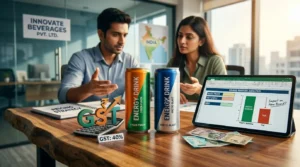
Launching an energy drink brand in India is exciting, especially as demand continues to grow. This is especially the case as demand is growing for functional beverages, fitness drinks and clean label alternatives. But the one thing you should pay special attention to while entering the Indian market is the GST on energy drinks in India.
For emerging beverage brands, GST is not just about compliance but is an essential factor for product pricing, profitability margins, and scaling up of the business model. This blog explains how GST affects energy drink brands in India, including applicable tax slabs, how pricing gets impacted. We tell you how startups can protect margins and also stay competitive.
India’s Energy Drink Market Is Growing Fast
The Indian energy drink industry is experiencing a period of accelerated growth driven by factors like urbanization, health consciousness, and the rising need for quick-effect energy drinks in students, working professionals, and athletes. As per estimates from the IMARC group, the Indian energy drink market had reached a valuation of around $1.5 billion in 2025. By 2034, it is projected to reach about USD 2.9 billion.
- Growing trend in fitness and sports lifestyle
- Growing need for health drinks
- Growth in e-commerce and quick-commerce
- Increasing preference for natural and herbal health drinks
However, despite the potential, taxes have emerged as one of the biggest challenges for new brands.
What Is the GST on Energy Drinks in India?
At present, most of the energy drinks available in India pay:
- 28% GST
- And 12% Compensation Cess
- Thus, the total tax burden comes close to 40%.
Energy drinks are generally treated as aerated drinks by the government and hence fall under the same category of high tax products.
This is especially problematic for new products because a large portion of the selling price goes towards taxes before any cost is incurred towards production, transportation, or marketing.
| Cost Component | Approximate Amount |
| Manufacturing Cost | 25 |
| Packaging & Labeling | 10 |
| Logistics & Warehousing | 5 |
| Marketing & Branding | 10 |
| Distributor & Retail Margin | 20 |
| Subtotal Before GST | 70 |
| GST (28%) | 19.6 |
| Compensation Cess (12%) | 8.4 |
Why High GST Matters for New Energy Drink Brands?
Higher Price at Retailers
A high GST means that your MRP is high too.
For instance:
- Manufacturing + packaging cost: ₹35
- Distribution + retailer margin: ₹20
- Marketing and branding: ₹10
- GST + cess impact: Significant addition
So, depending on positioning, the final retail price can easily cross ₹70 to ₹100. This could be a problem in price-conscious markets such as India, particularly in Tier 2 and Tier 3 cities.
Narrowed Profit Margins
This happens because newly established beverage companies operate on thin profit marginsdue to:
- Production in small quantities
- Increased cost of ingredients
- Costly packaging
- Marketing and sampling costs
The additional 40% tax burden makes these businesses even less profitable. Most startup companies have problems achieving high gross profit margins in their early years.
Pressure from Distributors and Retailers
Offline distributors dominate the beverage industry in India. They demand high margins, payment cycles, and promotions.
Because of high GST rates:
- Value of invoices increases
- Working capital requirements rise
- Less scope for discounts
This makes life harder for small startups competing against large beverage firms.
GST Classification Challenges for Energy Drink Brands in India
Another major challenge involves correct product classification.
The FSSAI has clearly stated that only those products that have been licensed under the guidelines for manufacturing water-based flavoured beverages can actually claim to be “energy drinks.”
If there is any confusion with regards to your product positioning, ingredient composition, or labeling, brands may encounter:
- Regulatory scrutiny
- Product relabeling costs
- Marketplace listing issues
- Compliance penalties
This will be a critical concern for entrepreneurs in the herbal or Ayurvedic beverages business.
How Can Ayurvedic and Natural Energy Drink Brands Position Better?
The Indian consumer is slowly moving towards:
- Low-sugar drinks
- Natural energy sources
- Herbal formulations
- Energy drinks without artificial ingredients
This provides an excellent opportunity for brands focusing on health and wellness.
Rather than going against mass energy drink producerssolely on the concept of energy, the brands can market their products based on:
- Wellness on a daily basis
- Attention & energy support
- Natural energy
- Functional nutrition
- Herbs-based performance drinks
With such a strategy, you can create a premium perception and also reduce direct price competition with mass-market energy drinks.
How GST Influences Your Energy Drink Pricing Strategy?
Premium Positioning vs Mass Market
For new brands, the initial choice is:
- Do you go for premium margins?
- Or high volume?
- With GST already adding to the cost of your goods, competing purely on price is difficult.
Premium pricing can give you:
- Better margins
- Higher perceived value
- Better branding flexibility
- Stronger D2C opportunities
While mass marketing demands scale in distribution and operation.
D2C Can Make Margins Better
A D2C strategy helps improve margins since:
- Retail margins are lower
- Customer acquisition is under your control
- You can offer bundling and subscriptions
This means that brands using their own websites have an edge over retail distribution with respect to better margins.
Smart Ways New Brands Can Protect Margins
Reduce Costs through Efficient Packaging
Packaging contributes significantly to beverage costs Light cans, PET bottles, and bulk purchases are some ways that could help with margins.
Repeat Business
Always remember that customer retention is much cheaper than customer acquisition. So it’s possible to improve profitability with subscription models and combo packs.
Build a Strong Brand Story
Indian consumers are increasingly buying lifestyle-driven products more and more these days. So a strong wellness focused identity can actually justify premium pricing with less problem.
Use Digital Marketing Efficiently
Don’t just focus on celebrity endorsements as a startup, but you can use:
- Fitness influencers
- Athletes
- Gym partnerships
- Micro-influencers
- Performance marketing
- Stay Fully GST-Compliant
Avoiding penalties and reducing tax inefficiencies is possible and all you need is proper invoicing, Input Tax Credit (ITC) claims and accounting processes.
The Future of Energy Drinks in India
There is still significant growth potential in the Indian energy drink market even despite the taxation challenges there.
Consumers now are looking for:
- Healthier alternatives
- Functional beverages
- Herbal energy drinks
- Sugar free options
- Fitness focused nutrition
Brands can build a sustainable long-term business if they combine smart pricing, regulatory compliance, clean ingredients and strong branding.
For any wellness-focused company entering the market, the opportunity is here. This is all about making differentiated products.
Conclusion
Understanding GST on energy drinks in India is very important before you launch a beverage brand. The current high tax structure affects pricing, profitability, and market competitiveness.
But start-ups can still succeed in this fast growing market. This is especially true for brands that manage costs, focus on premium branding, maintain compliance and build direct consumer relationships.
As Indian consumers continue to move towards wellness oriented beverages, consumer preferences continue to evolve. It’s likely that brands with natural formulations and strong positioning may gain a competitive advantage.
So whether you’re launching a functional drink, ayurvedic beverage or herbal energy formula, your success depends on balancing taxation, pricing strategy and brand value as well.
FAQs: GST On Energy Drinks In India
Q – What is the GST on energy drinks in India?
A – In most cases, GST levied on energy drinks in India is around 28%, with 12% cess, making it about 40%.
Q – Why are energy drinks heavily taxed in India?
A – Energy drinks may be classified the same as aerated or sugared drinks, which come under GST slabs due to health issues.
Q – Is there any influence of GST on energy drink pricing?
A – Yes. A high rate of GST influences product pricing, margin, and even affordability of products among Indian consumers.
Q – Can herbal/ayurvedic energy drinks qualify for a lower rate of GST?
A – It depends on the ingredients and formulation used in the energy drink, as well as the category under which it falls.
Q – Is the energy drink market growing in India?
A – Yes. The energy drinks market in India is expanding at a fast pace, due to increased fitness awareness and urban lifestyles.
Q – What must startups know about launching energy drinks in India?
A – Startups need to know about:
- Implications of GST
- FSSAI requirements
- Costs associated with distribution
- Branding strategy
- Manufacturing efficiency
- Pricing psychology


