As soon as you walk into any beverage aisle, one thing you would notice is that energy drinks are hardly ever in the same can as a soda, while wellness shots seldom fit in with the same size as craft soft drinks. It is not by coincidence. Choosing the right aluminium can size for different beverage categories everything. Perceived value and shelf presence to production efficiency and cost per unit are all connected. So give it a real thought before you finalise your packaging.
This guide breaks down how can size connect to beverage category and how to make a decision based on the positioning of your product rather than guesswork.
Aluminium Cans Market at a Glance
- The global market for aluminium cans was estimated to be around $57 billion in 2025 and expected to grow to around $71.9 billion in 2034, with a CAGR of 2.5%. (IMARC Group)
- With can based packaging gaining momentum within different product categories, having the right can format and size gives your brand a competitive advantage.
Choosing the Right Aluminium Can Size for Different Beverage Categories
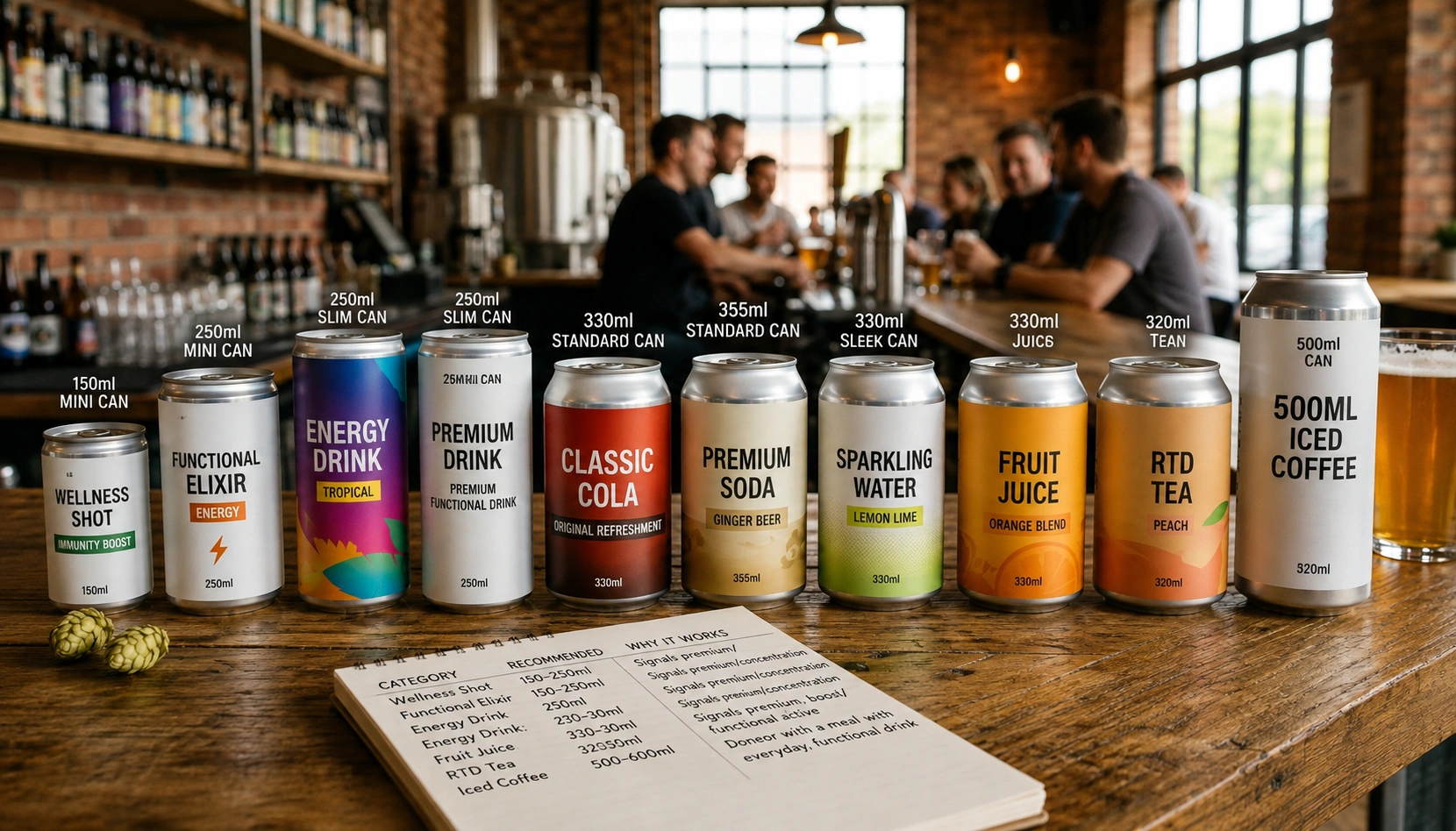
Can size is not just about volume but it affects your production line compatibility as well as shelf visibility. The way consumers perceive the value of your product is also where can size matters.
| Beverage Category | Typical Can Size | Why It Works |
| Wellness shots and functional drinks | 150 to 250 ml (mini can) | Signals concentrated dosage and premium positioning |
| Energy drinks | 250 ml (slim can) | Compact, portable and associated with the energy drink category globally |
| Soft drinks and soda | 330 ml (standard) | Familiar, cost efficient and widely compatible with filling lines |
| Sparkling water and flavoured water | 250 to 330 ml (slim or sleek) | Lightweight and modern shelf appeal for health positioned drinks |
| Juices and RTD beverages | 330 to 500 ml | Balances value perception with portion size |
| Tonic water and mixers | 200 ml | Matches standard single serve mixer proportions |
Mini Cans (150 to 250 ml): Best for Wellness and Functional Drinks
More preference is towards smaller formats in concentrated functional beverages like herbal shots, adaptogenic beverages or wellness tonics. The fact that the size of the container is from 150 to 250 ml communicates that a consumer has to drink it in one go. This is seen as a single and purposeful serving instead of sipping over time. A premium and health conscious poitioning the the result which many wellness brands are going for now.
Slim Cans (250 ml): The Energy Drink Standard
If you’re building an energy drink or a premium functional beverage, your go to choice can be a 250 ml slim can. The tall and narrower nature of the container will give your product a unique, vibrant presence on the shelves that will immediately communicate its identity to customers. It’s becoming closely associated with this category worldwide. Consumers can instantly recognise your product at just a glance.
Standard 330 ml Cans: The Versatile Default
The most used format for soft drinks, soda and general beverages is still the 330 ml. This is largely because it’s actually very cost efficient and also compatible with most filling and packaging lines. And it is familiar to consumers across markets which is a plus point.330 ml can is a safe starting point for when you’re launching a straightforward carbonated or still drink. You can keep your beverage manufacturing process simple and scalable.
Sleek Cans: A Middle Ground for Modern Brands
Sleek cans are the sweet spot between slim and standard formats. They are in fact shorter than a slim can but still look very different from your traditional cylindrical cans. This gives a contemporary look without moving into a smaller and niche volume which is what a lot of brands look for. And skeek cans also work well for sparkling waters, kombuchaand premium soft drinks.
Larger Formats (500 ml+): Juices and Value Driven Categories
Consumers want a bigger single serving when it comes to juices, ready to drink beverages and such. That’s when you strike the right balance with 500 ml cans between value perception and practicality. This size works and is common where the beverage is marketed to replace a meal, be a refreshment for longer occasions or simply better value per rupee spent.
Factors That Should Guide Your Final Decision
Production line compatibility: Switching can sizes can affects how your co-packing partner fills and seals them. So you need to check compatibility first.
Shelf and cold chain behaviour: Slimmer cans mostly chill faster and they also look better on shelves or quick commerce dark stores.
Cost per unit: Standard sizes like 330 ml mostly have low unit packaging costs. This is because of their large scale production and availability of materials.
Brand positioning: Small cans are seen to represent premium or concentrated products, while larger units represent value and shareability.
Conclusion
Choosing the right aluminium can size for different beverage categories is not just another packaging decision. This is a positioning decision which shapes how consumers in fact perceive your product before they have even tasted it. Mini cans suit wellness and functional drinks whereas slim cans dominate the energy drink space. Standard 330 ml formats are the most versatile default for soft drinks. Larger cans, on the other hand, work well for juices and value driven categories. Having an expert beverage can manufacturer to rely on in making this decision is highly valuable for your business.
FAQs
Q – What is the best aluminium can size for a new beverage brand?
A – It depends on your category. A 250 ml slim can is good for energy drinks, 330 ml standard cans are best for soft drinks and 150 to 250 ml mini cans are very popular for wellness and functional beverages.
Q – Do smaller cans cost more per unit than standard cans?
A – A regular 330 ml can enjoys better production economies of scale in some cases. So smaller cans can have a slightly higher unit cost which depends on your manufacturer and order size.
Q – Can I change my can size after launch?
A – Yes, however, it would require changes to be made to the packaging design and labelling. It’s therefore better to settle on a size based on your branding strategy in the long run.
Q – Are aluminium cans suitable for all beverage types?
A – Aluminum cans are effective for carbonated beverages, flavoured water, energy drinks and other ready to drink beverages, although some formulations that are more sensitive require extra lining inside.
Q – Does can size affect shelf appeal in retail and quick commerce?
A – Yes, smaller cans with a tall profile look more appealing than regular sizes in the store aisles and chilled displays.


