Do your beverages look simple on the surface? There may be something else going on behind the bottle. That’s called a complex journey. Your beverage has been exposed to a changing climate.
It starts with production facilities and warehouses and doesn’t end there. From the trucks to the ports, beverages go through a lot. Temperature can directly affect your beverage’s taste. Sunlight actually plays a big role here as well.
You get a quality promise from natural brands. Climate control is more than a logistic concern for them. Understanding how climate conditions influence beverage storage and transportation is essential.
Climate Impact on Beverages: Key Industry Stats
Let’s start with knowing some data points here. Why climate control matters so much in beverage logistics?
Did you know about the global foodwaste? About 1.3 billion tons of food is lost each year. This happens each year due to:
- Improper storage
- Bad transport
Source: MDPI
You should know that refrigeration gaps cause losses. About 526 million tons of perishable foods spoil each year. This is because of:
- Insufficient refrigeration
- Cold chain infrastructure
Source: Food Forward NDCs
Why Climate Conditions Matter in Beverage Storage
Temperature Sensitivity
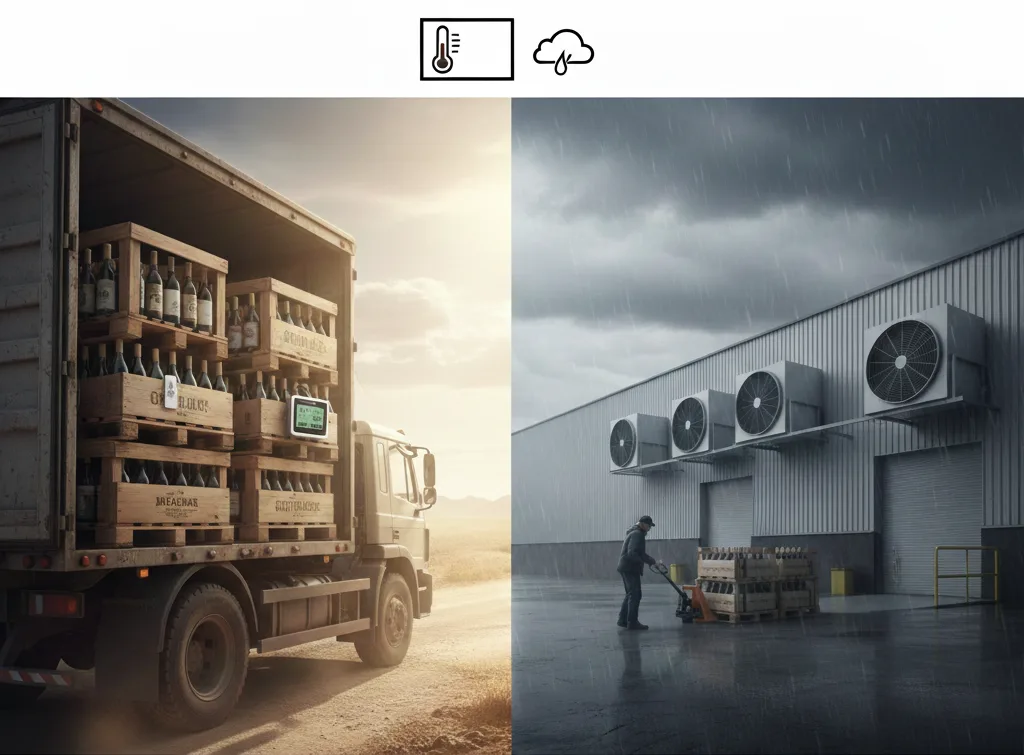
Temperature is known for really affecting beverage storage. The extra heat can:
- Change flavor profiles
- Degrade vitamins
- Degrade antioxidants
- Increase microbial activity
- Cause packaging expansion
- Cause leakage
This is what Cold temperatures does :
- Cause separation in natural beverages
- Lead to crystallization
- Lead to sedimentation
- Damage packing materials like glass
Humidity and Moisture Control
High humidity environments can:
- Weaken packaging materials
- Promote mold growth on labels
- Compromise secondary packaging like cartons
Low humidity isn’t the safest either. It can also cause problems for your beverage. This is especially for corked or sealed beverages. Oxidation is a big risk as the drying can affect closures.
Maintaining balanced humidity is essential. Your beverage and the packing is protected this way.
Sunlight and UV Exposure
Do you know how sunlight affects beverages? Even indirect sunlight can affect beverages. UV rays can:
- Break down natural ingredients
- Change color
- Change appearance
- Affect flavor
- Change nutritional value
Proper storage is the most important thing here. Mostly, beverages made from fruits are sensitive. So, protective packaging is also essential.
Climate Challenges During Transportation
Long-Distance Shipping
Many beverages travel long distances. They are the ones that go through sudden temperature changes. Delays are a common issue because of high humidity. So, what’s the solution? Insulated and climate control transport! This maintains the quality of your beverage.
Seasonal Variations
All of these are enough to really affect your beverage:
- Summer heat
- Winter cold
- Monsoon humidity
Want consistent quality? That’s possible through planning for seasonal changes.
Last-Mile Delivery
The final stage of deliver matters the most. This is where carefulness matters in last mile delivery. This way, your beverage reaches you nicely.
How Climate Affects Shelf Life
You have to take into consideration that temperature influences the life of the shell, too. Stable air conditioning provides:
- Slow oxidation
- Preserve flavor, color and nutrients
- Maintain packaging integrity
The most sensitive are, of course, the natural beverages. This is where careful management becomes important. Long-lasting freshness is the goal.
Best Practices for Climate Safe Beverage Handling
Brands make many efforts to protect your beverages. They rely on these against climate related changes:
- Temperature controlled warehouses
- Insulated transportation
- Climate resistant packaging
- Real time monitoring of temperature and humidity
- Seasonal logistics planning
These steps end up making the consumers get fresh beverages. You can enjoy them flavorfdul as when they were produced.
Conclusion
Climate conditions play a big role in beverage storage and transportation. Goog climate management maintains freshness. You taste good beverages because of that. Every bottle reaches the consumers this way.
FAQs
Q – Why do climate conditions matter for beverage storage?
A – Climate conditions matter as they affect:
- Taste
- Freshness
- Safety
- Packaging integrity
Q – How does heat affect beverages?
A – Heat affects beverages by reducing:
- Nutrients
- Change flavor
- Accelerate spoilage
Q – Can humidity damage beverage packaging?
A – Yes, humidity can really weaken the packaging. Very humidity can also affect the seals.
Q – Why are beverages protected from sunlight?
A – That’s important because UV rays can break down the natural ingredients.
Q – What is cold chain logistics?
A – This is where temperature controlled storage and transport is used.
Q – How does transportation affect beverage quality?
A – Temperature changes actually affect the taste here. They can also change the shelf life of beverages.
Q – Do natural beverages need special storage?
A – Yes. They are more sensitive with less preservations.
Q – How can brands reduce climate related beverage loss?
A – This is how brands do it:
- Temperature controlled storage
- Insulated transport
- Climate-resistant packaging
- Real time monitoring