While introducing a new beverage brand into the Indian market, one of the most important factors that you cannot overlook is choosing the right aluminium can size. Your choice of packaging format will determine how much you charge for it, where you place it on shelves, what the customer expects from the product, along with the logistic costs. A 150 ml can will send a completely different message to the customer compared to a 500 ml can. So neither is actually the right choice without any context.
This guide breaks down every major beverage can format which is available in the Indian market today. We explain what each is best suited for and what helps brand owners make an informed and commercially sound decision. The blog dives into can sizes to help you choose the right aluminium can format for your drink.
Why Aluminium Can Size Is a Brand Decision, Not Just a Packaging Decision
Typically, most beverage startups consider can size a logistical choice. Actually, it is a brand and profitability choice. Your aluminium can choice will decide:
Retail price level – smaller cans mean premium pricing per ml
Consumption occasion – a single-serve shot vs a hydration can
Labeling regulations compliance – different labeling rules based on volume under FSSAI regulations
MOQ – can sizes available are different across beverage can manufacturers in India
Shelf presence – slim tall cans are considered as “premium energy” vs wider mouth small cans considered as “relaxed refreshment”
Knowing all of that ahead of time will help you avoid months of positioning adjustment later.
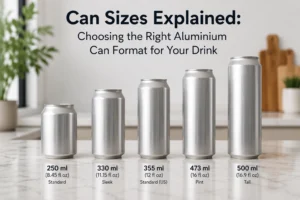
Standard Aluminium Can Sizes Available in India
150 ml – The Mini Can (Shot Format)
The 150 ml aluminium can is the smallest commercially feasible size in India. It is mainly utilized for:
- High-energy shots
- Cocktail or mocktail mixes
- Luxury herbal or adaptogenic elixirs
Trial / Sample packs of a new brand release
The 150 ml size holds the highest price per ml in the retail market, making it an excellent fit for brands under the functional beverages or shots category. The compact form of this makes it perfect for gifting sets as well as hotel minibar placements.
If you have a beverage formulation that is high potency such that the consumer only needs a little bit to experience the benefits, then the 150ml package option is one that fits well.
250ml – The Standard Single-Serve Can
The 250 ml can made out of aluminium is the single most recognizable single-serving container in India and worldwide. Take any convenience store or fuel station or even quick commerce, and the 250 ml can will dominate the aisle for energy drinks, sparkling water, and fruit drinks.
These are its key uses:
- Energy drinks and caffeinated beverages
- Sparkling fruit juices
- Flavoured sparkling water
- Ready-to-drink teas and coffees
The 250 ml pack strikes a balance between cost-effectiveness and value. Being available in the range of ₹50-120 per piece makes it easily available in the zone of impulse purchase. The 250 ml pack is thus often suggested to new beverage manufacturers in India who are venturing into contract manufacturing for the first time.
330ml – The International Standard
The 330ml aluminum can represents the world standard, being the volume used to establish the standard for canned beer and cola all over the world. The same form factor is gaining popularity in India quickly, especially among:
- Craft beers
- Sparkling premium drinks
- Isotonic sports drinks
- RTD cocktails and hard seltzers
With regard to margins, the 330 ml can provides good unit cost value over the 250 ml while commanding a premium over 250 ml SKU products between ₹80 – ₹150 range. From the standpoint of branding and modern trade retail channels, the 330 ml can is a format that provides excellent visibility on shelves without being overbearing.
It should be pointed out that from the stand point of pressure handling, especially in carbonated drinks, the 330 ml can format provides excellent pressure-handling capacity.
500ml – The Large Format Hydration Can
Aluminum cans of 500ml volume constitute the high volume/value proposition container. They are generally used for:
- Energy drinks where consumption is relatively high (gaming, long drives, sports)
- Electrolyte drinks
- Inexpensive RTD drinks
In the Western markets, the 500ml can size has been set as the industry norm for the mass marketed energy drinks category. In the Indian context, energy drink brands like Monster and Sting have created consumer familiarity with respect to this can size. From a pricing perspective, the 500ml can size necessitates a fine balance between price and margin after GST.
Brands who are choosing the 500ml format through aluminium can contract manufacturing can also factor in the volume need which is higher. This increases raw material costs proportionally.
Slim Can vs Standard Can vs Sleek Can: What’s the Difference?
Aluminium can formats go beyond volume as they are different in their physical dimensions.
Slim Cans – These are taller and narrower, which are typically used for 250ml formats. These cans are associated with premium positioning. They are actually the go to choice for energy drink brands who want a fashion forward shelf look.
Standard (Regular) Cans: This is the classic cylindrical format with a wider diameter. They are common in 330ml and 500ml formats. Cans like these are associated with mainstream beverages, beer and cola.
Sleek Cans: These are slightly wider than slim but are still taller than the standard one. You can think of this as the middle ground which works well for craft beverages and premium RTDs in the 250ml to 330ml range.
When you’re working with a beverage can manufacturer in India, remember to confirm which body dimensions they support in their production line. Not all of the manufacturers have tooling for every format.
How Do You Choose the Right Aluminium Can Format for Your Drink?
| Drink Type | Recommended Can Size | Rationale |
| Energy Shot / Herbal Tonic | 150ml | High potency, premium positioning |
| Energy Drink / Sparkling Water | 250ml | Impulse purchase, standard single-serve |
| Craft Beer / RTD Cocktail | 330ml | International norm and premium positioning |
| Sports / Hydration Drink | 500ml | High value and value perception |
| Functional Wellness Drink | 150ml–250ml | Controlled dosage and premium pricing |
Regulatory Considerations for Aluminium Can Sizes in India
FSSAI mandates that all of the packaged beverages show these no matter what beverage can format you choose.
- Net quantity in ml or litres on the label
- Nutritional information per 100ml serving
- Best before date and batch number
- Manufacturer name and address (your contract manufacturer’s FSSAI licence)
If you’re a brand who’s manufacturing through a private label beverage manufacturer, then ensure that your chosen partner has a valid FSSAI license. Make sure that the label artwork is format compliant before your first production run.
Conclusion
Choosing the right aluminium can format for your drink is probably one of the most crucial steps you will take while starting your beverage company. With the 250ml aluminium can, you are able to enter the market really quickly and with full customer recognition. 330ml aluminium cans will enable you to enter the segment with the premium and internationally oriented positioning. 150ml will allow you to access the segment focused on health benefits.
With Ayuray Organics, you are assured of the best services where we specialize in the production of beverage cans in India in various formats, ISO 9001:2015 and ISO 22000:2018 certified to ensure all cans that go out of our factory are of high quality and safety. From contract manufacturing, private labeling, or smart co-packing, our experts will assist you in picking up the best format.
Frequently Asked Questions (FAQs)
Q1. Which is the most popular aluminium can size in India?
The 250ml aluminium can is the most popular can size in India for energy drinks, carbonated drinks, and ready-to-drink beverages. It is readily available, consumer-friendly, and lies in the important impulse buying range.
Q2. Can I manufacture a custom can size that’s not a standard format?
It is possible to have beverage can sizes other than the standard sizes (150ml, 250ml, 330ml, and 500ml), but they come with much higher MOQs and tooling cost.
Q3. What is the difference between a slim can and a standard can?
The slim can is a can that is taller and narrower than the normal can. Slim cans are associated with energy drinks which have premium positioning while normal cans are used for beverages and beer.
Q4. Which aluminium can size is best for an energy drink brand launching in India?
The appropriate can size for the introduction of an energy drink into the Indian market is the slim aluminium can having 250 ml of liquid content. This can type is most recognized by consumers in the energy drink category and also facilitates competitive pricing and is available from most beverage can manufacturers in India.
Q5. Does FSSAI require different labelling for different can sizes?
According to FSSAI rules, the net quantity should be mentioned on all packaged drinks irrespective of their size. Nutritional information should also be shown per 100ml, and this is uniform for all sizes of the aluminum can. Make sure you design your labels in accordance with the rules before your first batch of production.
Q6. What is the minimum order quantity for aluminium can manufacturing at Ayuray Organics?
Minimum order quantities depend upon the size of the beverage can and its product. You can contact the Ayuray Organics team by calling +91 7087961144 or emailing at ayurayindia@gmail.com.


