
In India, sustainability matters a lot. Want to know the reason? That is the rapidly growing beverage manufacturing sector. Different kinds of waste from bottled water and juices are being handled. Factorises are the ones doing this. They handle packaging, raw materials, and waste every single day.
Proper waste management doesn’t just benefit the planet. Your wellbeing also on the line here. It is essential for compliance and cost savings.
Let’s see how beverage manufacturing plants manage their waste. You should know about the practices for environmental goals.
Important India Beverage Waste Management Stats
Did you know that plastic recycling is a challenge? India is actually giving out 13 million tonnes of plastic waste each year. You should know that only 60% of it is recycled. This leaves a gap for beverage packaging waste to enter. Source: Mint
Why Sustainability Matters in Beverage Manufacturing
You get long term succes from sustainability. This is what the Beverage plants in India are facing:
- Water scarcity
- Plastic pollution
- Stricter regulations
By adopting responsible waste management practices, this is possible:
- Conserve natural resources
- Minimize environmental impact
- Enhance credibility
- Lower operational costs
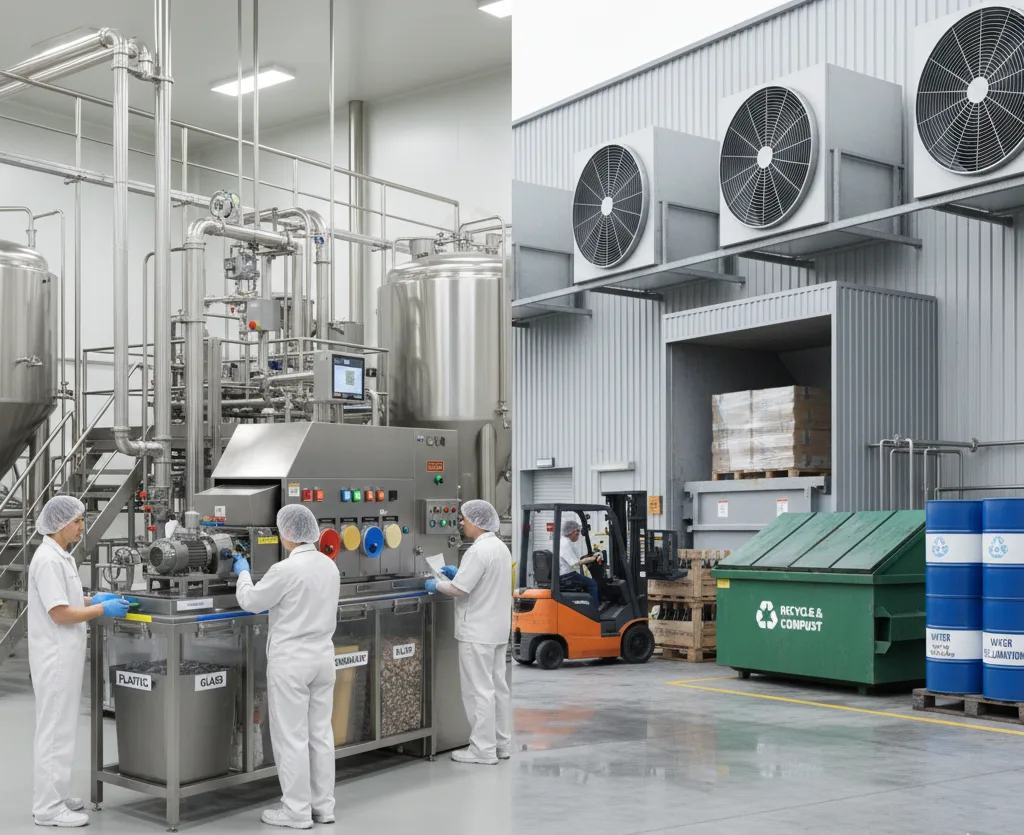
Comprehensive Waste Management Practices in Beverage Manufacturing Plants Across India
Beverage plants don’t just generate one type of waste. All of these happen:
- Wastewater
- Plastics
- Cartons
- Organic material
- Chemical byproducts
This is how manufacturers are managing them:
Water & Effluent Management
Beverage production isn’t really complete without water. It is used for cleaning, processing, and cooling.
Best Practices –
Effluent Treatment Plants (ETPs):
It’s really important to treat wastewater before reuse or discharge. This mostly includes:
- Biological treatment
- Clarification
- Filtration
Zero Liquid Discharge (ZLD):
Advances systems are what complete the water cycling:
- MBRs
- RO
This reduces the intake of freshwater.
Water reuse –
Treated water is mostly reused for:
- Cleaning
- Cooling towers
- Irrigation
- Production
This cuts the environmental impact and costs.
Plastic & Packaging Waste Management
These are major contributors to industrial waste:
- Plastic bottles
- Wrappers
- Caps
These are the industry strategies:
Extended Producer Responsibility (EPR) –
This is where companies collect a portion of their packaging. They also recycle it under government rules.
Using rPET –
Recycled PET reduces:
- Virgin plastic usage
- Landfill impact
Carton recycling –
The growing infrastructure plays a role here. Millions of beverages are collected through it. They are also recycled along.
Packaging redesign –
The recyclability is reduced with mono materials.
Solid Waste: Beyond Plastics
Other wastes include:
- Cardboard
- Paper
- Organic materials
Approaches –
Segregation at source
Waste is separated at the point of generation into these categories:
- Organic
- Recyclable
- Non recyclable categories
Color coded bins and clear SOPs are the ones helping compliance across production floors.
Composting & organic reuse
These organic wastes are processed into bio manure. This waste can also work as animal feed in some plants.
Recycling partnerships:
This is when the paper waste is sent to authorized recyclers. These help beverage plants in India meet sustainability.
Organic Waste Management in Beverage Plants
Organic waste is a big portion of total waste for many beverage manufacturers. These are the beverage manufacturers that use natural ingredients.
Common organic waste sources:
- Fruit
- Vegetable residues
- Herbal extracts
- Spent botanicals
- Fermentation by products
Best practices include:
- On site composting units
- Biogas plants using organic sludge
- Collaboration with local agricultural communities
Chemical & Hazardous Waste Management
Chemical waste in beverage manufacturing is limited.
Source includes:
- Cleaning
- Sanitizing agents
- Laboratory chemicals
- Boiler and ETP chemicals
Safe handling practices:
- Storage in leak proof containers
- Disposal is done through SPCB authorized hazardous waste handlers.
- Regular audits and documentation
FAQs
Q – What is waste management in beverage manufacturing plants?
A – This is where these are systematically handled:
- Wastewater
- Plastic packaging
- Organic residues
- Chemical byproducts
Q – Why is waste management important for beverage plants in India?
A – They are important to comply with CPCB SPCB regulations. They reduce:
- Water consumption
- Control pollution
Q – How do beverage manufacturing plants manage wastewater?
A – This is done using:
- Effluent Treatment Plants (ETPs)
- Biological treatment processes
- Filtration
- Zero Liquid Discharge (ZLD)
Q – What waste is generated in beverage manufacturing plants?
A – These are the common waste types:
- Wastewater
- Plastic bottles
- Packaging
- Cartons
- Organic waste
Q – How is plastic waste managed in the beverage industry in India?
A – Plastic waste is managed through:
- EPR
- rPET
- Packaging redesign
- Partnerships with authorized recycling
Q – What happens to organic waste in beverage manufacturing plants?
A – Organic waste like these are made into bio manure:
- Fruit residues
- Herbal byproducts
Q – What is ZLD in beverage manufacturing?
A – ZLD is Zero Liquid Discharge. This is the water management system where the wastewater is treated.


