Every time you reach for a drink, you don’t just choose a flavour. You’re actually choosing a type of beverage with its own storage, nutritional profile, and convenience. This is what everyone does, especially at home, work or even when travelling.
It’s not hard to ignore the rapidly evolving beverage market of India. With that, it becomes a must for everyone to know the difference between shelf-stable vs refrigerated beverages. This is how you make smarter choices that suit your lifestyle. With this guide, everything is broken down into everything you need to know.
Snapshot: India’s Booming Beverage Market
The non alcohol beverage market of India has been growing steadily if you notice. This is actually thanks to the rising health conciousness in the country. Demand for convenience can be seen along with the urban lifestyles.
In 2023, the market had a value of ₹1.37 trillion and may grow even more by 2029, reaching about ₹2.10 trillion. A CAGR of about 7.06% can be noted.
With this growth, you can see changing preferences among Indian consumers. They want much healthier and functional options. This highlights the difference between shelf stable and refrigerated beverages, more importantly. Source: Globe News Wire
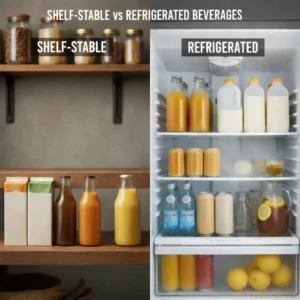
What Are Shelf-Stable Beverages?
Shelf stable beverages are basically drinks designed to stay safe. You can actually drink them at room temperature for extended periods. They can last about months or years, even if you don’t refrigerate them. But how is this possible? Well, it’s quite simple, actually. Drinks such as these are designed to prevent spoilage, using specialized processing and packaging.
Common Examples You’ll Find in India
- Tetra Pak juices and milk
- Canned soft drinks and iced tea
- UHT processed milk
- Ready to drink beverages packaged in sealed cartons
How Do They Stay Fresh?
- These shelf-stable drinks rely on these methods primarily:
- Heat processing to kill off harmful bacteria
- Aseptic packaging that prevents oxygen and contaminants from entering
- Sealed cartons or cans that protect the beverage without refrigeration
What are the Pros of Shelf Stable Beverages?
Convenient – No need for refrigeration until opened
Longer shelf life – Perfect for pantries, travel, or offices
Less dependent on electricity – Particularly helpful in areas with inconsistent power supplies
What Are Some Cons to Consider?
- Some of these products may have a loss of certain nutrients during processing
- Flavors may vary from fresh versions
- Be mindful of sugar and additives
What Are Refrigerated Beverages?
Refrigerated drinks are those that you keep cold before drinking. They really don’t have heavy heat treatment and they depend on the fridge.This means cold storage from the factory, through transport, to the shop, and then your home fridge.
Common examples in India:
- Fresh juices
- Cold coffee and cold brew drinks
- Lassi, buttermilk and dairy-based drinks
- Kombucha and probiotic drinks
- Fresh coconut water
Why Refrigeration Matters
These drinks are the ones that are really closer to their original form. This means less processing and fresh taste. But you need to keep in mind that the freshness means they can spoil faster. So you have to actually keep it chilled.
What People Love About Chilled Drinks
- Fresher, mostly closer to homemade flavour
- Better nutrient retention in many cases
- Great in hot weather as they are refreshing and cooling
The Downside
- You need reliable refrigeration and not everyone really has that 24/7
- They don’t last long, even in the fridge
- Mostly cost a bit more because of storage and transport needs
How Do Shelf-Stable vs Refrigerated Compare?
Here’s a simple comparison for you:
| Feature | Shelf-Stable Beverages | Refrigerated Beverages |
| Storage required | Room temp until opened | Must stay chilled |
| Shelf life | Weeks to months | Days to a couple of weeks |
| Taste | Can be processed | Mostly fresher |
| Nutrition | Some loss during processing | Retain more natural nutrients |
| Best for | Travel, pantries, bulk buying | Fresh eating/ drinking |
| Cost impact | Lower storage cost | Higher cold chain cost |
Which Works Better For Everyday Scenarios?
For School Lunchboxes or Office Bags
Shelf stable drinks are perfect because you may not have fridge access for hours. You can just enjoy it without worrying about it getting warm.
For Family Meals at Home
If you have a fridge with you, then go for a fresh optin like homemade taste juices.These include cold brew coffee or lassy, which can make meals feel better.
For Travel
Shelf stable wins here, if you’re going for long journeys, flights or car trips. This way, you can store bottles in your backpack without any worry. This doesn’t melt your ice packs or fridge access.
For Health-Mindful Drinking
It actually just depends on your goals. Want minimal processing and closers to fresh nutrition? Then choose refrigerated drinks as they make more sense. But there are plenty of healthier shelf stable options too.
Tips You Need To Make Smart Choices
- Look at ingredients carefully.
Natural ingredients, lower sugar and no artificial flavours
- Check storage instructions.
Some shelf stable drinks advice you to refrigerate them once opened.
- Understand your lifestyle
If your fridge isn’t always reliable, make sure to stick to more shelf stable.
- Think of the weather.
You need a properly chilled frink that feels good in India’s heat.
FAQs
Q – What’s the real difference between shelf-stable and refrigerated drinks?
A – Before opening, shelf stable drinks are made to stay safe at room temperature.
Q – Does heat treatment reduce nutrition?
It can affect some heat sensitive nurtrition like Vitamin C. But many other nutrients and proteins mostly stay intact. Fortified drinks can make up for any loss.
Q – Can I consume a shelf-stable drink after it has been exposed to heat?
A – Yes, if it is unopened and within the expiration date.
Q – Must I refrigerate shelf-stable juices after opening?
A – Mostly, yes. Although they are shelf stable until opened, after that, they tend to go bad faster.
Q – Are refrigerated drinks always better in hot climates?
A – Yes, they are more refreshing. But only if you keep them well chilled. If your refrigerator is not cold enough, they will go bad just as fast.
Q – Which one is more environmentally friendly?
A – Shelf-stable drinks use less energy. This is because they do not have to be refrigerated constantly.
Q – Should kids drink more shelf-stable or refrigerated drinks?
A – For healthy hydration, ensure that you select low sugar options in either case.