When you think about beverages, what’s the first thing that comes to mind? Most imagine how refreshing a cold drink feels on a scorching summer day. Or just how comforting a hot beverage is during winter. But climate isn’t just about consumer preferences for beverage formulations. It’s all about what affects the science and stability of your beverage product. Your beverage’s taste and market are all affected by the climate.
Are you developing a sports drink for a hot Indian summer? Or perhaps a soothing herbal infusion for cooler months? Don’t forget just how much the climate conditions matter here.
It’s important for you to know how hot and cold climates shape beverage behaviour. Especially for a market like India. This is how your product delivers the right sensory experience.
What Do the Numbers Say About Beverage Demand in Different Climates?
Climate trends are actually doing a lot for much they affect the beverage industry economically. Do you know what research shows? People are demanding more and more liquid refreshment beverages. That has been noticed right after the systematic increase in temperature. In fact, a study found that:
- You should be aware that rising temperatures have increased demand. Beverage demand went up by about0.21% annually.
- If we talk about the heat waves, then they have also contributed. Beverage demand actually grew by about 2.1% for each degree rise here. But in cold conditions, the demand isn’t as much.
Source: ScienceDirect
India is a country where long summers are seen more, so it would be better if brands lean towards hot conditions.
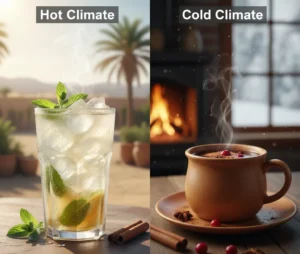
What Exactly Changes Between Hot and Cold Beverage Formulations?
If we look at it simply, then climate does affect how a drink is made. Or even how it performs in the market. Here’s how:
Ingredient Stability and Processing
Heat actually speeds things up here. That sometimes happens in ways you don’t really want. Keep in mind that chemical reactions mostly happen way faster in hotter climates. This is where microbial growth actually becomes an issue. Sensitive ingredients can also degrade way more easily.
For example:
- If processing isn’t carefully controlled, a lot can happen. Heat sensitive vitamins, plant extracts, and botanicals can lose effectiveness
- Beverages mostly depend on hot fill in regions that are warmer. This is what ensures safety and shelf stability, even without any refrigeration. This is common for juices, teas, and ready to drink products.
Do you know what the focus for beverages is in cooler climates? That is on protecting delicate flavours and nutrients. This is possible if you use methods like:
- Cold fill
- Aseptic processing
- Minimal heat exposure
The goal is actually always the same. That is keeping the product safe and stable, so the quality isn’t sacrificed.
Sensory Experience and Serving Temperature
Temperature changes how a drink tastes, literally.Warm beverages are the ones that release aromas way more easily. This is what makes them feel fuller and sweeter as well. But cold drinks are the ones that can mute sweetness. You may have noticed more acidity and bitterness in these drinks, because it highlights that. That’s why:
- It may feel balanced to have a hot cup of tea in winter, as it comforts you.
- It may feel refreshing to have a chilled herbal drink in summer. Even with the same formula, it may seem light to you.
Formulators have to deal with this so the drink tastes just right for you. It needs to be at the right temperature so the consumers actually like it.
How Does Hot Climate Shape Beverage Formulation?
Refreshment is a big priority for the people of India. The country mostly has a hot climate. This affects formulation in many ways:
- You may notice more electrolytes and hydration boosters in sports drinks because of this. Also, in functional drinks, you may notice them.
- The level of sweetness is sometimes increased because low temperatures make the sweetness less noticeable.
- The techniques of preservation are selected with care to avoid too much heating damage to the product.
- The role of packaging is more significant because it helps to protect the product from heat. So it’s safe during transport and storage.
As heat is also a factor that contributes to spoilage, a delicate balance between safety, shelf life, and sensory attributes has to be achieved by formulators.
What About Cold Climate Beverage Development?
In cold climates or during the winter season, people tend to consume warm or slightly heated beverages. This changes the paradigm for beverage formulation as follows:
- Beverages are formulated to be more aromatic and flavorful when consumed warm.
- The ingredients have to be stable at higher temperatures, particularly in teas, coffees, and spiced drinks.
- Mouthfeel becomes a consideration, as people generally prefer comforting and soothing sensations in their mouths.
- This is where hydration does matter, but really not more than comfort.
Basically cold climate beverages are more about comfort than anything else. So it’s not just about cooling down.
Conclusion
Formulation of beverages is really not a one size fits all process. It comes together with science, sensory knowledge, and practical realities.Whether you are formulating a refreshing drink for the summer season in a tropical area or a comforting hot infusion for the winter season, climate adaptation of your formulation can make your beverage more enjoyable, more stable, and more competitive in the market.
Frequently Asked Questions
Q – How does hot climate impact ingredient stability?
A – High temperatures can speed up the degradation of sensitive nutrients. This is why stabilizatin and processing choices are important.
Q – Why do drinks taste different when served hot or cold?
A – Temperature is the doing it all, as it affects aroma release and taste sensation in your drink. This changes the sweetness, acidity, and bitterness.
Q – What processing methods do I choose for hot climate beverages?
A – Hot fill and thermal pasteurization are mainly employed for ensuring safety and shelf life in hot climates.
Q – Are cold climate beverages formulated differently?
A – Yes, they mostly focus on warm flavours, aroma and ingredients that perform well.
Q – Does packaging really matter by climate?
A – Absolutely. Packaging is mainly for protection against heat damage.
Q – How do formulators really test climate performance?
A – They do it this way:
- Stability studies
- Sensory panels
- Pilot runs
- Testing


