
India’s beverage manufacturing industry is undergoing a major transformation. The rising demand for healthy, natural and functional beverages is behind. Manufacturers are now thinking again about the processing and the packaging techniques. So, what to choose, the cold fill process or the hot fill process? This is one of the most important decisions in beverage production.
India uses both of the filling processes widely. This affects the product, shelf life, nutrient retention, packaging cost, and distribution strategy. Understanding their differences is what you need to do.
India Beverage Industry: Key Statistics & Market Insights
It is important for you understand the scale of India’s beverage market first:
- India’s non alcohol beverage market was valued a lot in 2024. It was at USD 32.06 billion. It is projected to reach SD 68.73 billion by 2033. Source: IMARC
- The Indian beverage packaging market is what affects the fling technologies. It is expected to grow from USD 9.6 billion in 2024 to USD 18.2 billion by 2033. Source: IMARC
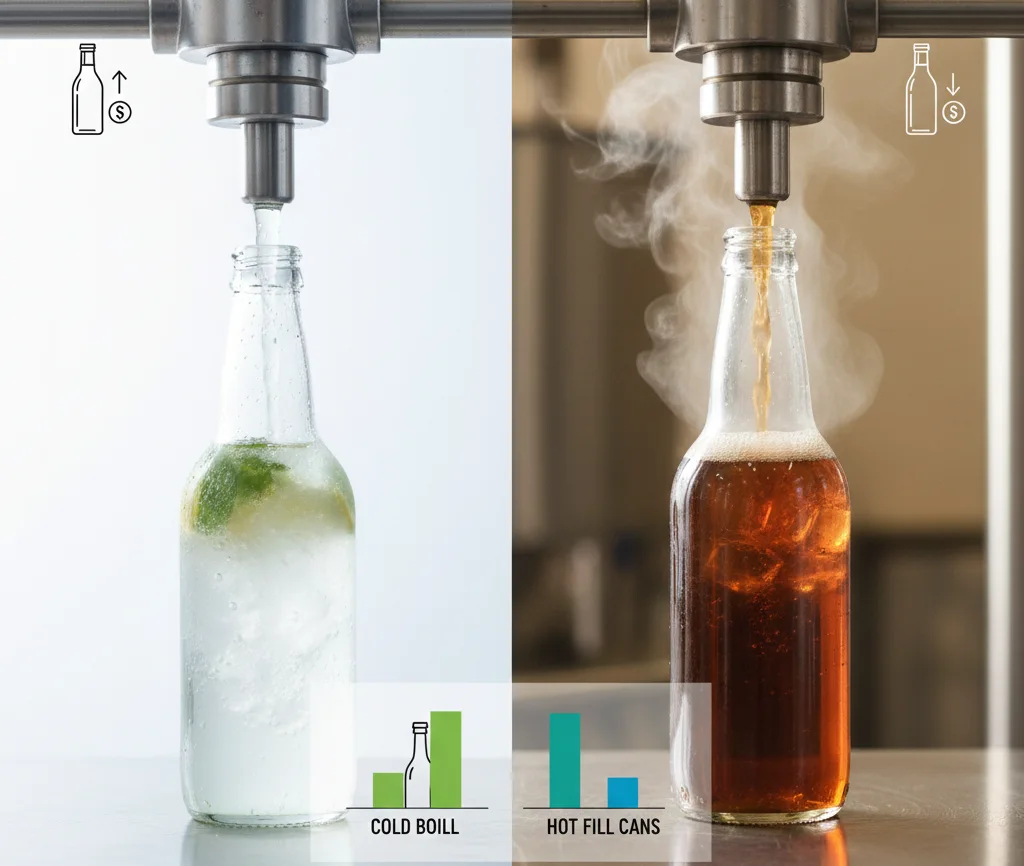
What Is the Hot Fill Process?
The hot fill process is when the beverage is heated to high temperatures. The temperature is mostly 85°C to 95°C. This eliminates harmful microorganisms. The hot liquid is then:
- Filled into containers
- Sealed immediately
- Cooled
A vacuum is created as the product cools. This enhances sealing and shelf stability.
Beverages Commonly Using Hot Fill
- Fruit juices and nectars
- Iced teas and herbal teas
- Sports and isotonic drinks
- High acid beverages
What are the Advantages of Hot Fill?
Hot fill gives you good microbial safety. This makes it perfect for beverages that need long shelf life at room temperature. Many hot filled beverages can go stable for 6 to 12 months. This is possible even without refrigeration. With this process, you don’t even need chemical preservatives. This is good for clean label positioning.
What Are The Limitations Of Hot Fill?
Hot fill can expose beverages to high temperatures. This can reduce heat sensitive nutrients. This can slightly change the flavour and colour. Also, it needs high resistant packaging materials. This increases:
- Packaging costs
- Energy consumption
What Is the Cold Fill Process?
The cold fill process fills beverages at chilled temperatures. Instead of heat, sterilisation is achieved through:
- Filtration
- UV treatment
- Aseptic processing
Filling occurs in a sterile environment to prevent contamination.
Beverages Best Suited for Cold Fill
- Cold pressed fruit
- Vegetable juices
- Plant based
- Dairy alternative beverages
- Probiotic and functional drinks
- Premium organic beverages
Advantages of Cold Fill
Cold fill is ideal for beverages with:
- Delicate flavours
- Heat sensitive nutrients
It helps retain:
- Natural taste
- Colour
- Nutritional value
It is increasingly important for health conscious Indian consumers. Cold fill also supports:
- Lighter
- Eco friendly packaging
Limitations of Cold Fill
Cold fill systems need:
- Aseptic infrastructure
- Strict hygiene controls
This results in higher initial investment. Shelf life is mostly shorter unles cold chain distribution is maintained. This can increase logistics costs in some regions of India.
Cold Fill vs Hot Fill: Key Differences
| Aspect | Cold Fill | Hot Fill |
| Filling Temperature | Ambient or chilled | 85 to 95°C |
| Nutrient Retention | High | Moderate |
| Shelf Life | Shorter | Longer |
| Packaging | Standard PET and HDPE | Heat resistant PET and glass |
| Energy Use | Lower | Higher |
How To Choose the Right Filling Process in India?
For Indian beverage brands, the choice between cold fill and hot fill depends on:
- Product type
- Target market
- Distribution reach
Cold Fill Is Ideal If:
The beverage is positioned as:
- Organic
- Fresh
- Functional
These are your top priorities:
- Nutritional value
- Flavour preservation
Hot Fill is Ideal if:
- The product needs a long shelf life without refrigeration.
- Distribution spans multiple regions and climates
- The beverage is acidic and heat stable.
Conclusion
Did you know that both cold fill and hot fill processes matter? They actually play an important role in beverage manufacturing. Hot fill’s dominating shelf stable products across India. This is making cold fill popular. People now demand natural, clean label, and premium beverages. Choosing the right filling technology is not just a technical decision.
FAQs
Q – What is the main difference between cold fill and hot fill?
A – Cold fill uses aseptic conditions without heat. But hot fill relies on high temperatures for sterilisation.
Q – Which filling process is better for organic beverages in India?
A – Cold fill is preferred for organic beverages. This is due to better nutrient and flavour retention.
Q – Are preservatives required in the case of hot fill beverages?
A – Not necessarily. The need for preservatives is primarily fulfilled by heat sterilization.
Q – Is cold fill more expensive than hot fill?
A – Did you know cold fill mostly has higher initial setup costs? They offer superior product quality.
Q – Which beverages in India use hot fill?
A – These are the ones that mostly use hot fill:
- Fruit Juices
- Infused teas
- Isotonic Drinks
Q – Is cold fill a refrigeration requirement?
A – The cold liquid drink requires refrigeration.
Q – What are differences in packaging between cold fill and hot fill?
A – Hot fill requires heat-resistant packaging. Cold fill is compatible with lighter packaging materials.
Q – Which filling method is more shelf-stable?
A – Hot fill packaging has a longer shelf-life.


